
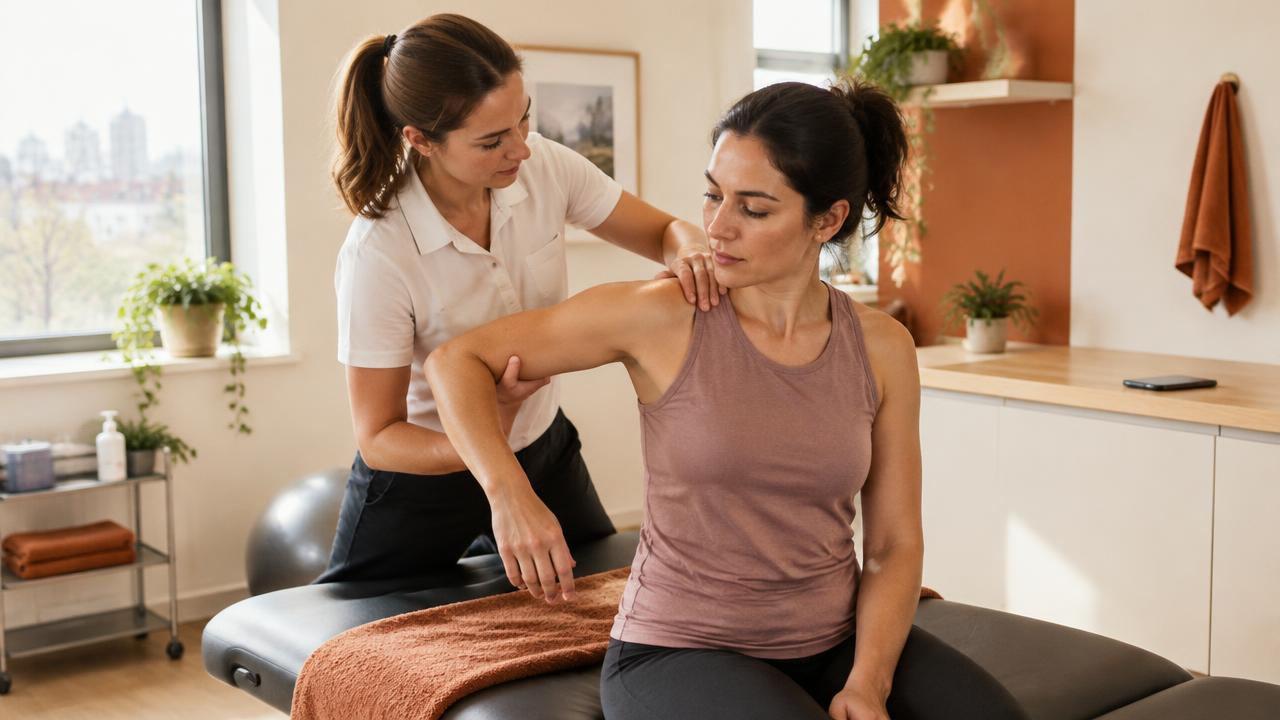
It's 2:40 p.m. You're in the middle of mobilizing a shoulder, your patient is finally describing the pain they feel when they lift their arm, and your phone buzzes on the counter. You don't move: your attention belongs to the person in front of you. Forty minutes later, between patients, you see two missed calls from an unknown number. No message. Maybe someone who twisted an ankle playing soccer, maybe someone who's been looking for a physiotherapist near home for weeks. In a clinic, missed calls come with the job. Whether you work alone or with a small team, there will always be moments when nobody can pick up. This guide offers practical ways to stay connected with every person who calls, without ever compromising the quality of your treatments.
Why Physiotherapy Clinics Miss So Many Calls
Physiotherapy is hands-on work that requires full attention. During an assessment, manual therapy or a supervised exercise session, answering the phone would be disrespectful to the patient and would affect the quality of care. Letting it ring is perfectly normal.
In many small clinics, the front desk isn't covered all day. The receptionist is on break, helping a patient pay or fill out an insurance form, or simply works part-time. And for physiotherapists in solo practice or doing home visits, there's often nobody else to step in.
Then there's the timing. Many active patients call at lunch, after work or on Saturday morning, exactly when your schedule is busiest. The result: missed calls pile up, and that's not a sign of poor management.
What the Caller Is Going Through
The person calling you is often in pain. They hurt their back shovelling snow, they have tendinitis that keeps them up at night, or they've just had knee surgery and their doctor told them to start rehab quickly. In many cases, they simply want to know if you have room and when they can be seen.
When they reach voicemail, they don't know if their message will be heard today or in three days. Some people leave a clear message and wait. Others hang up and call the next clinic in the Google results, because the pain doesn't make them want to wait. It's nothing personal: they're looking for an answer.
So the challenge isn't to answer every call live, which is impossible while treating patients. The challenge is to quickly confirm that the call was seen and that someone from the clinic will take care of them.
Running the Numbers for Your Own Clinic
Rather than relying on general figures, do your own exercise. Simply look at the clinic's call history for a normal week and count the missed calls from numbers that aren't already in your patient files.
Here's an example calculation, just to illustrate the method. If your clinic misses 4 calls from new patients per week and only one of them ends up going elsewhere, with a treatment plan of 8 sessions at $100, that's $800 a week. Over 46 working weeks, that's about $36,800. Your numbers will be different, but you'll have an order of magnitude that reflects your reality.
- Count missed calls from unknown numbers during a typical week.
- Estimate how many of those people never called back.
- Calculate the average value of a treatment plan (number of sessions multiplied by your rate).
- Multiply the number of lost patients by that average value.
- Project the result over a year to see the whole picture.
The Limits of Voicemail in a Clinic
Voicemail is still useful, but it demands a lot of effort from both sides. The patient has to leave a complete message with their name, number, reason for calling and availability. Many people don't, or leave an incomplete message that then has to be decoded.
On your end, you have to listen to messages between patients or at the end of the day, write down the details, then call back. Often the person doesn't pick up because they're at work. You end up playing phone tag for days, and each callback attempt eats a few minutes of an already tight schedule.
Texting changes that dynamic. The patient can write when it suits them, even discreetly at the office, and the clinic can reply between treatments. Nobody needs to be available at the same moment for the conversation to move forward.
Automatic Text After a Missed Call: How It Works
The idea is simple. When nobody can answer, the clinic's line forwards the call using conditional call forwarding, a feature offered by most phone providers in Canada. Within seconds, the caller receives a text message sent from your clinic's number, the very number they just dialled.
The message confirms that their call was seen, that the team is currently with patients, and invites them to write the reason for their call. While you calmly finish your session, the person is already leaving you the useful details. When you or your receptionist pick up the phone, everything is there.
That's exactly what Alloia does: an automatic text after every missed call, sent from your current number, then the rest of the conversation by text in a single inbox. You keep the number listed on your website, your Google profile and your business cards. The tool doesn't replace anyone at the front desk: your team is the one replying to patients and setting appointments, simply when they're able to.
Sample Texts for Physiotherapists
A good automatic text should be short, warm and reassuring. In healthcare, it should also avoid asking for sensitive medical details in the very first message. The goal is to open the conversation, not to do the assessment by text.
Announce a realistic reply time and stick to it. If your front desk is closed on Friday afternoons, say so rather than promising a reply within the hour.
- General: "Hello, this is [Name] Physiotherapy Clinic. We're with patients and couldn't pick up. Could you text us a quick note about the reason for your call? We'll get back to you as soon as possible."
- New patient: "Thanks for calling! If you'd like to book a first appointment, just let us know the area of the body involved and your availability. We'll suggest a time slot."
- Existing patient: "Hello! We're in a treatment right now. If you need to move or cancel your appointment, text us here and we'll confirm the change."
- After hours: "Good evening, the clinic is closed for the day. Leave us a text and we'll reply as soon as we open tomorrow morning."
- With a safety reminder: "We'll get back to you shortly. If you have sudden severe pain, a significant injury or worrying symptoms, call 811 or go to the emergency room."
Protecting Confidentiality by Text
In physiotherapy, you handle health information, which is among the most sensitive there is. In Quebec, Law 25 governs the protection of personal information in the private sector, and you're also bound by professional secrecy. Texting can absolutely be part of how you communicate, as long as you use it with good judgment.
A good rule is to keep texting for logistics: first contact, availability, confirming or moving an appointment, the clinic's address. Clinical details are best discussed in person or through an appropriate channel. For specific questions about your obligations, the Ordre professionnel de la physiothérapie du Québec (OPPQ), or your provincial regulator outside Quebec, and a legal advisor remain your best references.
- Never ask for a diagnosis, health insurance number or medical report by text.
- Stick to a general description of the need (for example "knee pain" or "post-surgery follow-up").
- Don't confirm clinical information to someone whose identity you're not sure of.
- Let your patients know the clinic may text them, and respect those who prefer the phone.
- Always respect unsubscribe requests: if someone texts STOP, you stop texting them.
Organizing the Front Desk Around Texts
Texting shouldn't become one more distraction during treatments. The idea is to give you back control of your time. Many clinics set aside short, fixed windows to reply to messages: between patients, at lunch and at the end of the day.
If you work with a team, be clear about who handles new requests. With a single shared inbox, the receptionist, the physiotherapist or the physical rehabilitation therapist all see the same conversation history. Nobody replies twice to the same patient, and nobody gets forgotten because the message stayed on the phone of a colleague who's off that day.
For physiotherapists doing home visits or in solo practice, it's even more valuable. You can reply from your parked car between two visits, rather than making a round of callbacks in the evening.
Best Practices for Staying Professional by Text
Texting is a more informal channel than email, but your patients see it as an extension of your clinic. A few simple habits help build trust from the very first exchange.
Keep in mind that the person writing to you is often in pain and may be worried. A calm tone, clear sentences and a reply within a reasonable time make a big difference in how they see your clinic.
- Introduce yourself with the clinic's name, and ideally your first name.
- Write in complete sentences, without overly casual abbreviations.
- Reply the same day whenever possible, even if it's just to say you'll follow up tomorrow with available times.
- Always confirm the date, time and address of the appointment in writing.
- Remind patients what to bring or wear (comfortable clothing, a doctor's referral if their insurer requires one).
- Avoid giving treatment advice by text: invite the person to come in for a consultation instead.
FAQ: Common Questions from Physiotherapists
Do I need to change my clinic's number? No. The automatic text is sent from your current number. Your patients keep dialling the number they know, the one on your website, your Google profile and your receipts.
Will my patients find it impersonal? Most appreciate a quick reply rather than waiting with no news. A well-written message in the clinic's name is reassuring. And your team takes over the rest of the conversation.
Does the text book appointments for me? No. The text opens the conversation and gathers basic information. You or your receptionist suggest a time slot and confirm the appointment, just as you already do.
Is it compatible with confidentiality? Yes, if you keep texting for logistics and avoid exchanging detailed clinical information. For your specific obligations, check your professional regulator's resources.
What happens if I answer the call? Nothing changes: if someone picks up, the call goes ahead as usual. The text is only sent when the call couldn't be answered.
Can people calling from a landline receive the text? Generally, no. The call stays in your history, and the best thing to do is call the person back as soon as possible.