
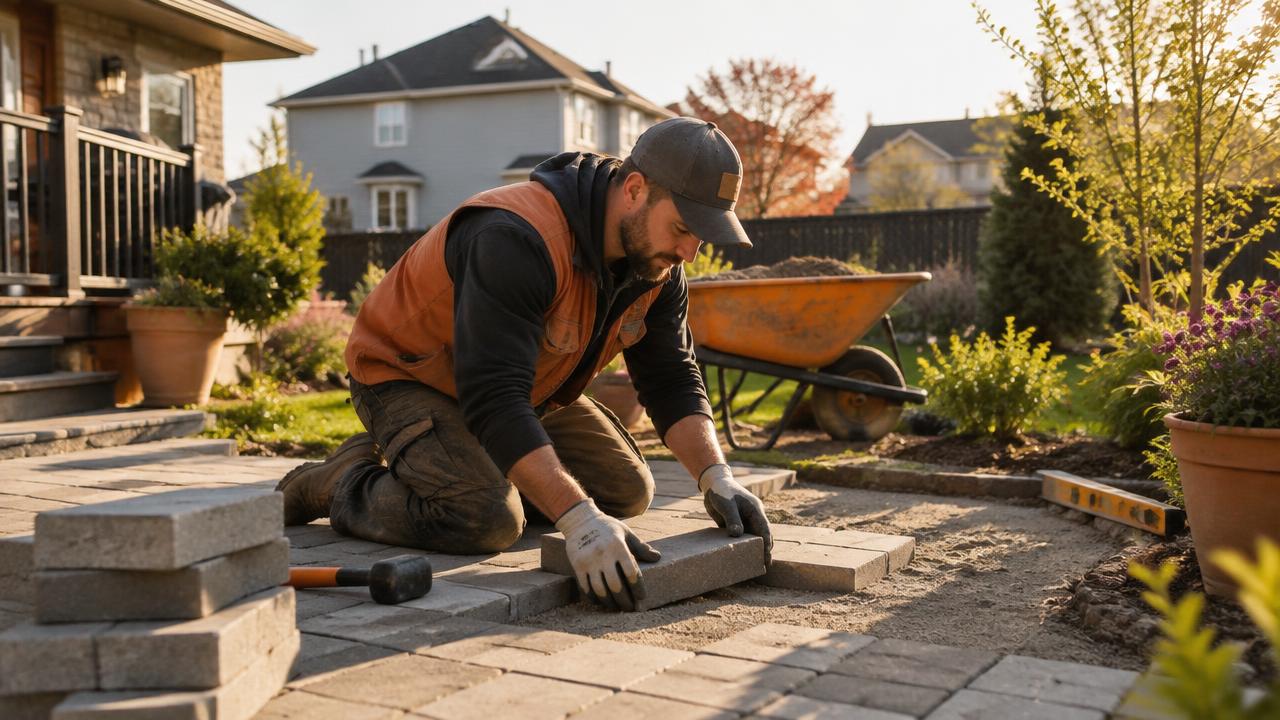
It's late April, the snow has barely melted, and you're already in a backyard in Boucherville, on your knees, levelling a paver base while the plate compactor runs beside you. In your jacket pocket, the phone buzzes again. A homeowner in Longueuil wants a quote for a retaining wall, a neighbour of your job site asks if you lay sod, a homeowner in Brossard would like a mowing contract for the summer. With gloves on, dust everywhere and machinery roaring, you can't answer, and that's normal. For a landscaper, spring is the season when everyone wakes up at once. Missed calls come with the job, especially when you're the one doing the quotes and working on site. This guide offers a simple way to stay in touch with every person who calls you, sort the requests and fill your schedule without spending your evenings on the phone.
Why the Phone Never Stops Ringing in Spring
In Quebec, the landscaping season is short and intense. All winter long, homeowners look out at their snow-covered yards dreaming of a new patio, a cedar hedge or a redone flower bed. As soon as the snow melts and the first warm days arrive, they spring into action, and almost all of them do it the same week.
What makes this period tricky is that the calls come in exactly when you're restarting your job sites. You're starting the contracts signed in the fall, doing spring cleanups for your regular customers, hiring and training your seasonal workers. The phone rings while you're unloading stone, driving the skid steer or explaining a plan to your crew.
Many landscaping companies are small teams where the owner does everything: quote visits, supplier orders, invoicing and a good share of the field work. There isn't always someone in the office, and sometimes there's no office at all. Missing calls under those conditions has nothing to do with a lack of professionalism. It's the reality of a trade practised outdoors, with your hands.
What the Customer Calling You in April Goes Through
The person calling a landscaper in spring has often waited all winter to do it. They've looked at photos on Pinterest, set a budget with their partner and want the work done before the construction holiday or before the first family get-together in the backyard. They also know that good landscapers get booked up fast.
As a result, they don't just call you. Very often, they've made a list of three or four companies found on Google or recommended by neighbours, and they call them one after another. When they reach voicemail, they move on to the next one. It's not a lack of loyalty, it's simply a reasonable way to shop around for an important project.
For you, that means the speed of the first reply matters a lot. You don't need to send the quote within the hour. You just need to show that you received the request and that someone will take care of it. That first sign of life is often enough to keep the customer waiting for you instead of calling elsewhere.
Sorting Requests: Not All Are Equal
In spring, you receive a mix of very different requests. A full landscaping project with a patio, retaining wall and lighting is nothing like a request to mow a lawn for $40 a week. Both are legitimate, but they don't require the same quoting time or the same priority in your schedule.
The problem, when you have fifteen missed calls at the end of the day, is that you don't know which is which. Calling everyone back to ask the same basic questions takes up an entire evening. A first written exchange lets you gather the essentials before you even get back in touch, and decide where to put your energy.
You can also decide in advance which types of work you won't take on this year. If your schedule is already full for big projects until July, it's better to say so honestly and quickly than to leave someone waiting for three weeks. A customer you answered frankly will think of you the following year.
- Major landscaping projects: patio, pavers, retaining walls, large plantings. Quote visit required.
- One-off jobs: sod installation, spring cleanup, hedge trimming, mulching. Quote often possible from photos.
- Seasonal contracts: weekly mowing, flower bed maintenance. To assess based on your capacity and service areas.
- Requests outside your scope: complex irrigation, tree removal, fences. Better to refer quickly to someone you trust.
The Limits of Voicemail in Peak Season
Voicemail seems to solve the problem, but it quickly shows its limits in peak season. Messages are long, often recorded in the car or with kids in the background. You have to listen to everything in the evening, write addresses down by hand, then call back one by one. And many people hang up without leaving a message, which leaves you with an unknown number and no idea what the person wanted.
Calling back adds another problem: timing. You call at 7:30 p.m., but the person is at soccer with their kids. They call you back the next day at 10 a.m., when you have both hands in the dirt. This game of phone tag can go on for days, and in the meantime, a competitor may have already done their visit.
Texting solves a good part of this problem. The customer writes their request when it suits them, you read messages during your lunch break, and the conversation moves forward even if you never speak on the phone before the visit. For a landscaping project, it also lets you receive photos of the yard, which are often more useful than a long description.
Automatic Text After a Missed Call, Applied to Landscaping
The idea is simple. When nobody can answer, your business line forwards the call using conditional call forwarding, a feature offered by most phone providers in Canada. A few seconds later, the caller receives a text message sent from your number, the very number they just dialled.
The message confirms that their call was received, explains that the crew is on a job site and invites them to describe their project in writing. While you finish your day, the customer is already sending you their address, the type of work they want and a few photos of their yard. When you get home, you have a clear list of requests instead of a pile of missed calls with no context.
That's exactly what Alloia does: an automatic text after every missed call, sent from your current number, then the rest of the conversation by text in a single inbox. You keep the number on your trailer, your job-site signs and your Google profile. The tool doesn't replace anyone: you or your team assess the projects, prepare the quotes and talk to customers, simply when you're able to.
Sample Texts for Landscapers
A good automatic text for a landscaper is short, warm and useful. It names your company in the very first line, explains why you didn't answer and asks for exactly the information you need to prepare the next step. Avoid promising a visit within the week if you know you're fully booked: an honest timeline builds more trust than a promise you can't keep.
You can prepare one version for peak season and another for the rest of the year. Here are a few examples to adapt to your situation.
- General: “Hello, this is [Name] Landscaping. We're on a job site and couldn't pick up. Text us your address and the type of work you'd like, and we'll get back to you as soon as possible.”
- Peak season: “Thanks for calling! It's the spring rush and we're receiving a lot of requests. Describe your project and send two or three photos of your yard, and we'll reply within a few days.”
- Quote: “Hello! To prepare a quote, send us your address, the work you'd like (pavers, planting, sod, retaining wall) and your ideal timeline. We'll schedule a visit.”
- Seasonal maintenance: “Hello, thanks for your interest in our maintenance service. What's your address and which services interest you (mowing, flower beds, trimming)? We'll check whether your area is on our route.”
- Fully booked: “Thanks for calling. Our major projects are booked until mid-July. If that timeline works for you, text us your address and your project, and we'll add you to our list.”
Organizing Quotes During the Rush
Replying quickly is the first step. The second is staying organized during the eight or ten weeks when requests pile up. It's easy to forget a customer who has been waiting two weeks for a quote, especially when requests come in by phone, text, email and Facebook at the same time.
Group your quote visits by area to cut down on driving. If three customers from the same town texted you, schedule them the same afternoon. Also keep a written record of what you told each one, especially when several people on your team are talking to customers. A shared inbox lets everyone see the same history and keeps requests from getting stuck on a foreman's phone.
Finally, keep people informed. A customer who knows their quote is coming on Friday is far more patient than one who has heard nothing. A two-line follow-up text is often enough to keep the connection.
- Rank each request by type and size from the very first exchange.
- Ask for photos of the yard to prepare the visit or even estimate without travelling.
- Group estimate visits by geographic area.
- Suggest two or three specific time slots rather than an open question.
- Confirm the date, approximate time and address of the visit in writing.
- Send a short follow-up to customers who have been waiting several days for their quote.
Preparing for the Season in Fall and Winter
The best time to prepare for the spring rush is when the phone is quiet. Fall and winter are perfect for reviewing your messages, your prices and the way you receive requests. When April arrives, everything is already in place and you can just focus on the work.
Use the off-season to reach out to last year's customers. A short text in March offering a spring cleanup or renewing a maintenance contract often fills part of your schedule before the rush even starts. Just make sure you have those customers' consent to text them, and always respect an unsubscribe request.
It's also the right time to check the practical details: does your Google profile show the right number and the right hours? Is your conditional call forwarding turned on? Is your automatic message up to date with the services you're offering this year? An hour of preparation in February can save you a lot of headaches in May.
- Update your list of services and the areas you serve.
- Prepare your text templates for peak season.
- Check that your Google profile and website show the right number.
- Reach out to your regular customers before the rush begins.
- Decide in advance how much work you can realistically take on.
Running the Numbers for Your Business
There's no universal figure for landscaping jobs lost because of a missed call, and every business is different. The most useful thing is to look at your own call history during the busiest weeks of last spring.
Here's an example calculation, just to illustrate the method. If you missed 30 calls from new customers in May and 5 of them ended up hiring another landscaper, with an average project worth $3,000, you let $15,000 slip away. If even one of those customers had become a multi-year maintenance contract, the real value would be even higher. Your numbers will be different, but this order of magnitude will help you decide whether it's worth changing how you work.
- Count missed calls from unknown numbers during your busiest period.
- Estimate how many of those people never called back or texted.
- Calculate the average value of a project and of a one-season maintenance contract.
- Multiply to get an estimate of what those calls were worth.
FAQ: Common Questions from Landscapers
Do I need to change my business number? No. The automatic text is sent from your current number. Your customers keep dialling the number they know, the one on your trailer, your signs and your Google profile.
What happens if I answer the call? Nothing changes: if you or a team member picks up, the call goes ahead as usual. The text is only sent when the call couldn't be answered.
Does the text write quotes for me? No. The text opens the conversation and gathers basic information. You assess the yard, prepare the quote and talk with the customer.
Can I change my message depending on the season? Yes. It's useful to have a message suited to the spring rush, then switch back to a simpler message when things calm down in the fall.
Do people calling from a landline receive the text? Generally, no. The call stays in your history, and the best thing to do is call the person back as soon as possible.
Will my customers find it impersonal? Most people prefer a quick reply to a long silence, especially when they're shopping around several companies. A well-written message in your company's name is reassuring, and you take over the rest of the conversation.