
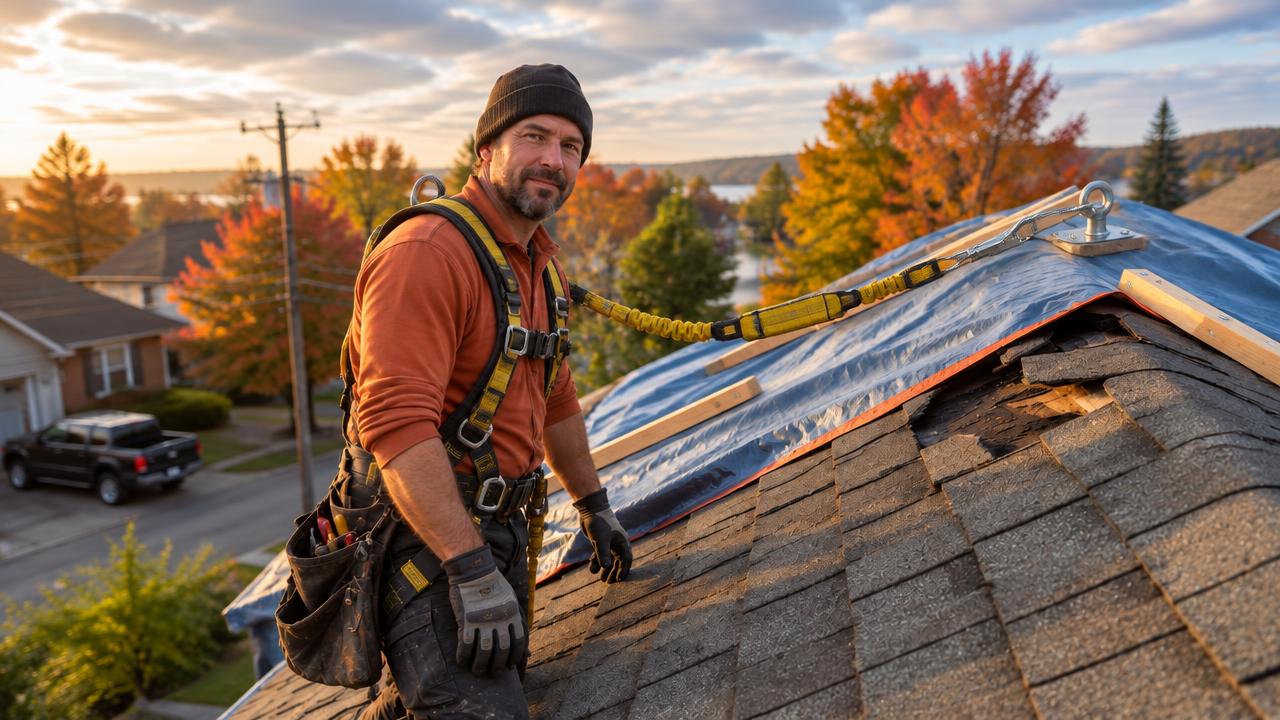
The day after a big windstorm, you're on a roof before 7:30 a.m., harness clipped in, laying a tarp over a section of torn-off shingles. In your pocket, the phone won't stop buzzing. A shingle that blew away in Lévis, a water leak in a bedroom ceiling in Saint-Jérôme, a loose flashing on a duplex in Rosemont. You obviously can't answer up there, and that's the right call. Your safety and the job at hand come first. In the evening, back on the ground, you count fifteen, twenty, sometimes thirty missed calls. Some homeowners left a message, others didn't. For a roofer, missed calls after a storm come with the job. This guide offers a simple way to stay in touch with every person who calls you, sort out the emergencies and organize your quotes, without spending your evenings on the phone.
Why the Phone Blows Up After a Storm
Roofing is a trade where demand comes in waves. In normal times, calls are spread across the season: a planned roof replacement in the spring, an inspection before selling a house, a small repair noticed in the fall. But as soon as high winds, hail, freezing rain or heavy snow hit a region, dozens of homeowners discover a problem at the same time and pick up the phone the same morning.
The catch is that those are also the days when you're least available. You're already on a job site, handling emergency repairs for existing customers and coordinating your crew. Climbing up and down a ladder to answer every ring is neither realistic nor safe.
Many roofing companies in Quebec are small teams where the owner also does the estimates, orders materials and works on the roofs. There isn't always someone in the office to take calls. Missing calls under those conditions has nothing to do with a lack of professionalism: it's simply the reality of a trade practised at height.
What the Homeowner Calling You Goes Through
The person calling a roofer after a storm is often worried. They see water dripping in the attic, a stain spreading across the ceiling, or shingles scattered across the yard. They don't know whether it's serious, whether they should call their insurer first, or whether it can wait a few days.
When they reach a full voicemail box, or when nobody calls back before evening, they do what anyone would: they call the next roofer on Google. It's not a lack of loyalty. They have a real problem and want to know quickly whether someone will take care of it.
For you, that means post-storm calls are among the most valuable of the year, but also the most fragile. The first roofer to show signs of life often has a head start, even if they can't come out the same day. A simple, quick and reassuring acknowledgement already changes how the customer sees you.
Sorting Emergencies: Safety First
Not every call has the same level of urgency. An active leak above an electrical panel is nothing like three missing shingles on a shed. The challenge, when you've missed twenty calls, is knowing which ones to handle first without calling everyone back to ask the same questions.
That's where a first written exchange becomes very useful. By asking people to describe the situation by text, and ideally send a photo taken from the ground, you get the information you need to prioritize within minutes. Use the opportunity to share a basic safety reminder too: nobody should climb onto a damaged or slippery roof, and in case of immediate danger (downed power lines, a structure giving way), call emergency services first.
- Very urgent: water coming inside, roof open, damage near electrical equipment, structural risk.
- Urgent: shingles or membrane torn off with no visible leak yet, loose flashing, hanging gutter.
- To schedule: minor damage, preventive inspection, quote request for a full roof replacement.
- To check: requests tied to an insurance claim, where the customer may be waiting for their insurer's adjuster.
The Limits of Voicemail on a Storm Day
Voicemail seems like a solution, but it quickly shows its limits when volume climbs. Mailboxes fill up, messages are long and sometimes hard to understand because of background noise, and many people hang up without leaving anything. In the evening, you have to listen to everything, write addresses down by hand and call back one by one.
Calling back also has a timing problem. You call at 7 p.m., but the person is having dinner with their kids or doesn't hear their phone. The next day, you're the one on a roof when they call back. Meanwhile, the damage can get worse and the customer can find someone else.
Texting lets things move forward without both people being free at the same moment. The homeowner describes the problem when they can, you read messages on your break, and the conversation progresses even if you never actually speak before the visit.
Automatic Text After a Missed Call, Applied to Roofing
The idea is simple. When nobody can answer, your business line forwards the call using conditional call forwarding, a feature offered by most phone providers in Canada. A few seconds later, the caller receives a text message sent from your number, the very number they just dialled.
The message confirms that their call was received, that the crew is on a job, and invites them to describe the problem in writing. While you safely finish your repair, the customer is already sending you their address, the nature of the damage and sometimes a photo. When you come down, you have a clear list instead of a pile of missed calls with no context.
That's exactly what Alloia does: an automatic text after every missed call, sent from your current number, then the rest of the conversation by text in a single inbox. You keep the number on your truck, your Google profile and your job-site signs. The tool doesn't replace anyone: you or your team assess the damage, prepare the quotes and talk to customers, simply when you're able to.
Sample Texts for Roofers
A good automatic text for a roofer is short, reassuring and useful. It names your company in the very first line, explains why you didn't answer and asks for exactly the information you need to prioritize. Avoid promising a same-day visit if you know you're swamped: an honest timeline builds more trust than a promise you can't keep.
You can prepare a "normal" version and a "storm" version that you switch on when call volume spikes. Here are a few examples to adapt to your situation.
- General: "Hello, this is [Name] Roofing. We're on a job site and couldn't pick up. Text us your address and a short description of the problem, and we'll get back to you as soon as possible."
- After a storm: "Thanks for calling. We're receiving a lot of requests since the storm. Describe the damage and send a photo taken from the ground if possible. Water leaks are handled first."
- Safety reminder: "For your safety, please don't go up on the roof. If water is coming in near electrical equipment or there's immediate danger, contact emergency services first."
- Quote request: "Hello! For a roof replacement quote, send us your address, the type of roof (shingles, membrane, metal) and its approximate age. We'll schedule a visit."
- Evenings and weekends: "Good evening, our office is closed. Text us your address and the problem, and we'll reply on the next business day."
Organizing the Quote Queue
After a storm, the challenge isn't just replying, it's staying organized for several weeks. Requests come in by the dozen, visits pile up, and it's easy to forget a customer who has been waiting ten days for a quote. A simple method will save you a lot of headaches.
Group your visits by area to cut down on driving. If three customers from the same neighbourhood texted you, schedule them the same half-day. Also keep a written record of what you promised each one, especially when several people on your team are talking to customers. A shared inbox lets everyone see the same history and keeps requests from getting stuck on an employee's phone.
Finally, keep people informed. A customer who knows they're on your list and will get a visit on Thursday is far more patient than one who has heard nothing. A two-line follow-up text is often enough.
- Rank each request by urgency from the very first exchange.
- Group estimate visits by geographic area.
- Suggest two or three specific time slots rather than an open question.
- Confirm the date, approximate time and address of the visit in writing.
- Send a short follow-up to customers who have been waiting several days.
Building Trust When Customers Are Wary
After a weather event, homeowners are often approached by contractors they don't know, sometimes even door to door. The Insurance Bureau of Canada has previously warned storm victims about scammers who take advantage of these situations. Customers are therefore, rightly, more cautious.
The way you communicate in writing can become an asset. A text that comes from your company's official number, with your name, a professional tone and clear information, is reassuring. In Quebec, customers can check a contractor's licence in the Régie du bâtiment du Québec (RBQ) registry, and many do before accepting a quote. Feel free to include your licence number in your messages and quotes.
For insurance files, stick to the facts. Explain what you observed, send dated photos and a detailed quote, but let the customer and their insurer handle the claim. That way you'll avoid misunderstandings.
- Always introduce yourself with your company name and your first name.
- Include your RBQ licence number on your quotes.
- Send clear photos of the damage you observed during the visit.
- Never promise what the insurer will or won't cover.
- Respect unsubscribe requests: if someone texts STOP, you stop texting them.
Running the Numbers for Your Business
There's no universal figure for jobs lost in roofing after a storm, and every business is different. The most useful thing is to look at your own call history for the week following the last big wind or hail event in your area.
Here's an example calculation, just to illustrate the method. If you missed 25 calls from new customers that week and 4 of them ended up hiring another roofer, with an average repair worth $800, you let $3,200 slip away. If even one of those customers had needed a full roof replacement a few years later, the real value would be even higher. Your numbers will be different, but this order of magnitude will help you decide whether it's worth changing how you work.
- Count missed calls from unknown numbers during the week after a storm.
- Estimate how many of those people never called back or texted.
- Calculate the average value of a repair and of a full roof replacement.
- Multiply to get an estimate of what those calls were worth.
FAQ: Common Questions from Roofers
Do I need to change my business number? No. The automatic text is sent from your current number. Your customers keep dialling the number they know, the one on your truck, your signs and your Google profile.
What happens if I answer the call? Nothing changes: if you or a team member picks up, the call goes ahead as usual. The text is only sent when the call couldn't be answered.
Does the text write quotes for me? No. The text opens the conversation and gathers basic information. You assess the damage, prepare the quote and talk with the customer.
Can I change my message during a storm? Yes. It's useful to have a message suited to high-volume periods, stating that water leaks are handled first, then switch back to your usual message once things calm down.
Do people calling from a landline receive the text? Generally, no. The call stays in your history, and the best thing to do is call the person back as soon as possible.
Will my customers find it impersonal? Most people prefer a quick reply to a long silence, especially when water is coming into the house. A well-written message in your company's name is reassuring, and you take over the rest of the conversation.